
This case study covers OOG transport to Norway of oversized offshore platforms using breakbulk liner shipping.
Cargo particulars and task
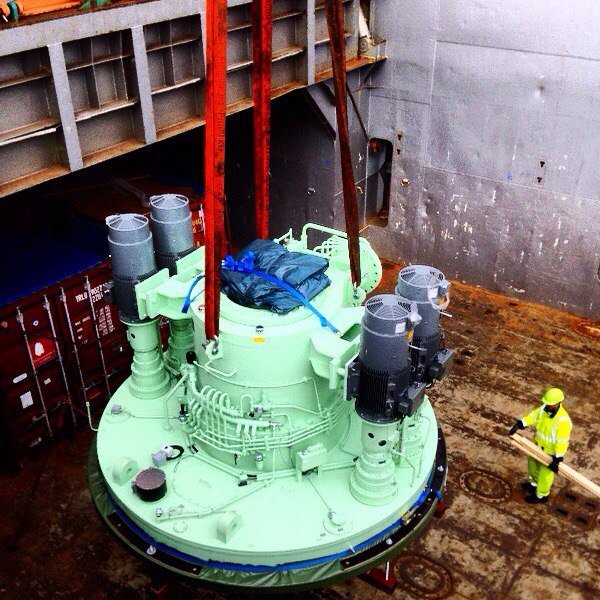
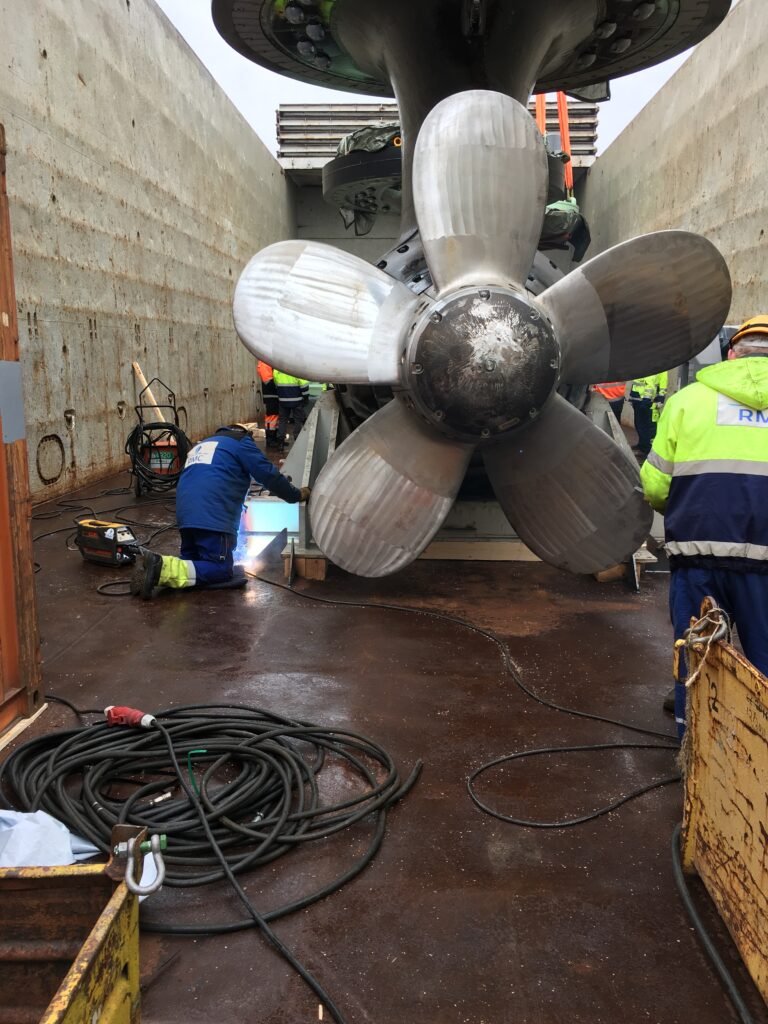
The shipment consisted of a full set of azimuth thrusters, including:
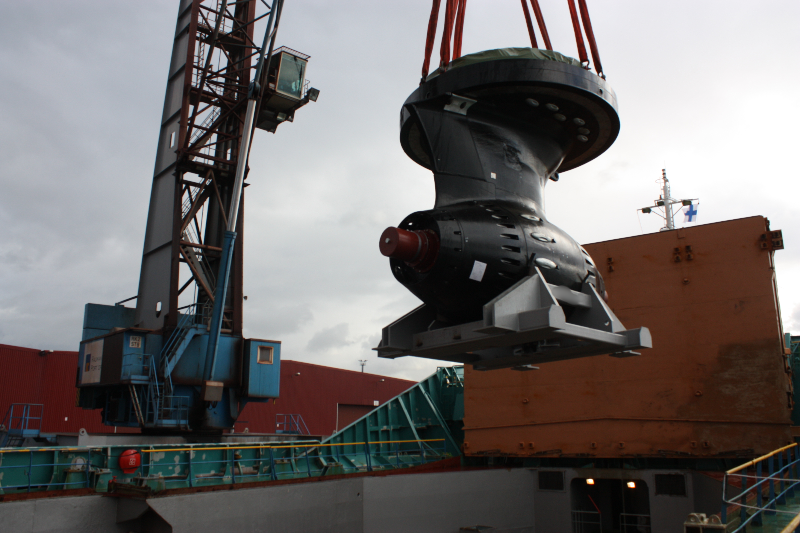
- 2 × main thruster units (approx. 5.0 × 3.0 × 7.5 m, 120 tonnes each)
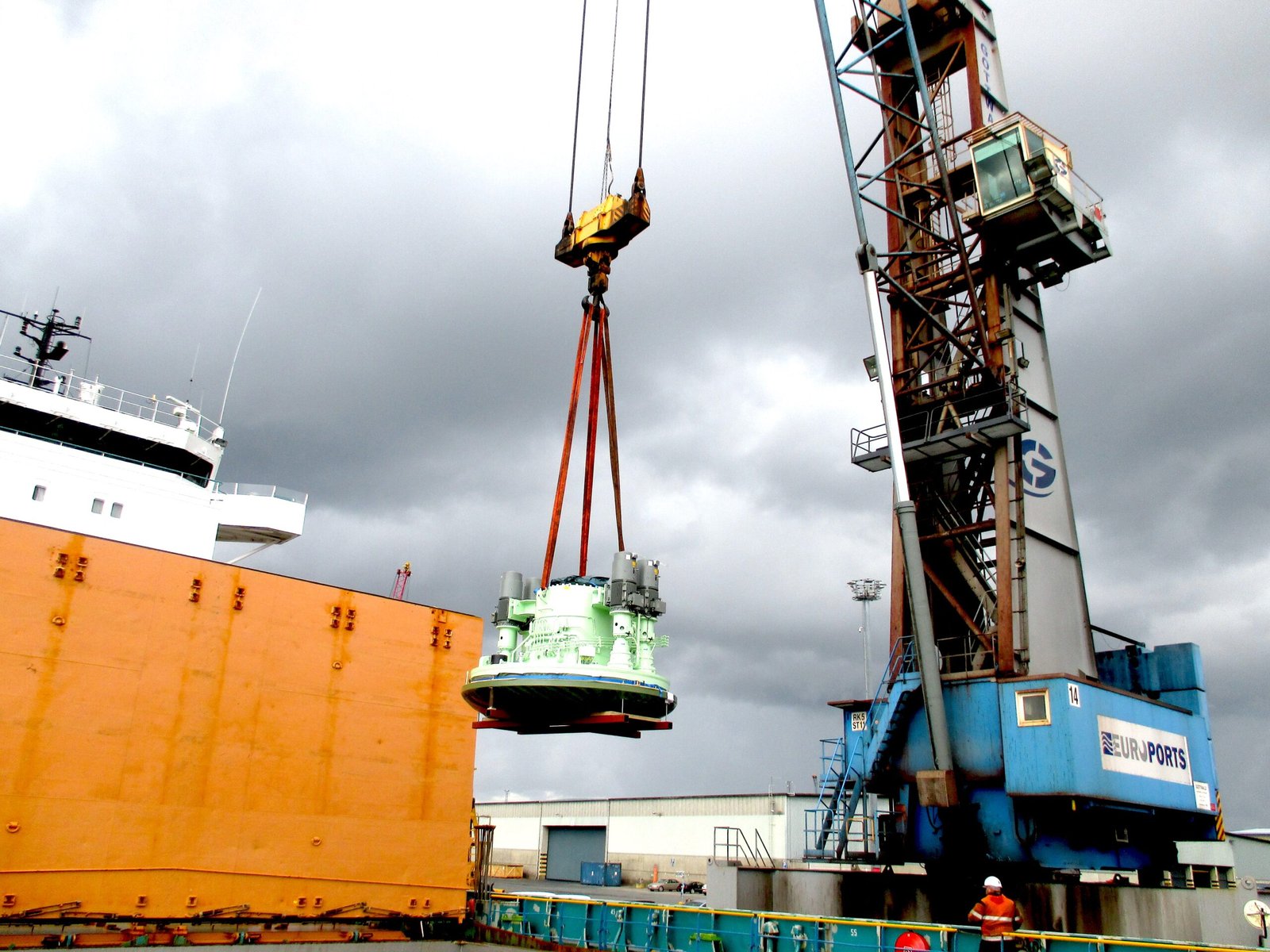
- 2 × internal components (approx. 3.5 × 3.5 × 2.5 m, 26 tonnes each)
- 2 × bronze propellers
The cargo represented high-value marine propulsion equipment with strict handling and stowage requirements.
Scope of work
Our scope included:
- vessel chartering (underdeck stowage requirement)
- engineering of lashing and securing arrangements
- stevedoring, supervision of loading operations
- cargo securing onboard
Key challenges
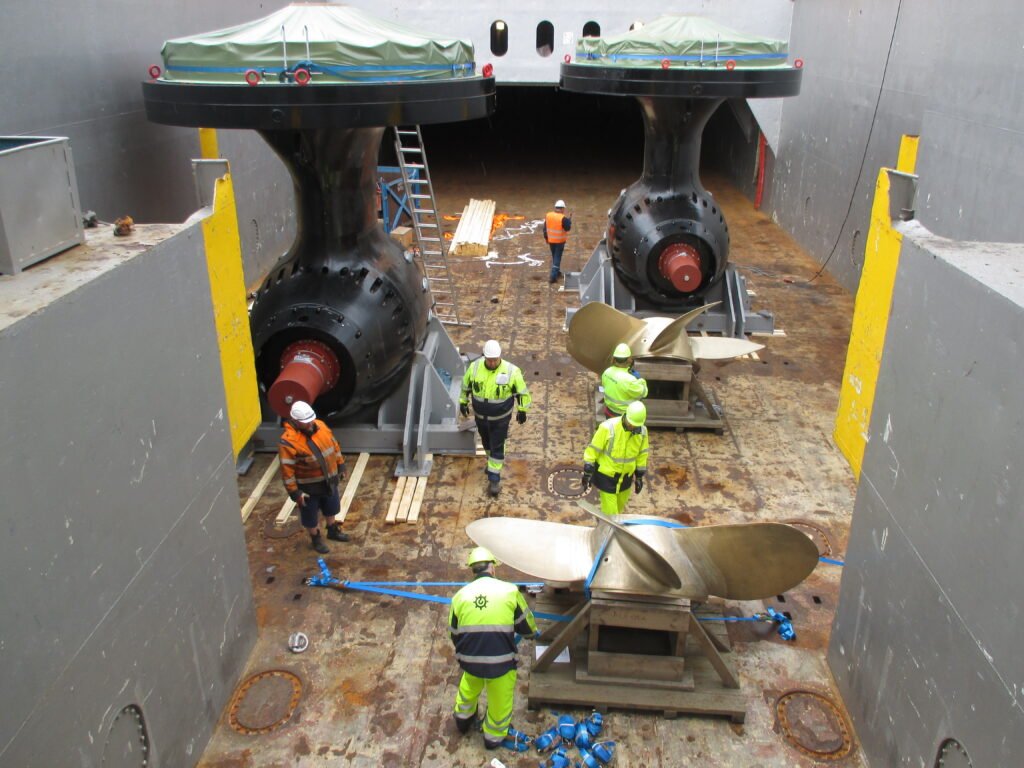
The main technical challenge was related to the geometry and weight distribution of the thrusters:
- extremely high unit weight (120 tonnes)
- elevated centre of gravity
- sensitivity to movement during sea passage
To mitigate these risks, we implemented a securing concept combining:
- extensive welding of stoppers to the vessel structure
- custom load distribution planning
- heavy-duty chain lashing
Project execution
The execution phase required precise coordination between terminal operations, vessel crew and engineering supervision.
Prior to loading, the vessel’s hold was prepared to accommodate the cargo footprint and load distribution. Special attention was given to contact areas and supporting structures due to the high unit weight and concentrated loads.
Each thruster unit was lifted using heavy-duty lifting gear in a controlled tandem operation. During lifting, constant monitoring of sling angles and load balance was maintained to prevent any tilting caused by the elevated centre of gravity.
Once positioned in the hold, the cargo was carefully aligned according to the pre-approved stowage plan. Positioning tolerances were critical to ensure even load distribution and sufficient clearance for securing works.
The securing process included:
- installation of heavy chain lashings in multiple directions
- welding of steel stoppers directly to the vessel structure
- reinforcement of contact points to prevent micro-movements
Given the cargo value and sensitivity, the securing arrangement was designed not only for standard sea conditions but also to eliminate any dynamic shifting under vessel motion.
All works were carried out under supervision, with continuous verification of lashing tension, weld integrity and overall stability.
The loading sequence was planned to optimise weight distribution within the hold, ensuring vessel stability and compliance with loading limits.
Final inspection was conducted prior to departure to confirm full compliance with the securing plan and class requirements.
We continue to handle similar heavy lift and offshore equipment shipments today, applying updated engineering standards and vessel options.
Learn more about our:
If you are dealing with similar cargo, feel free to get in touch.