
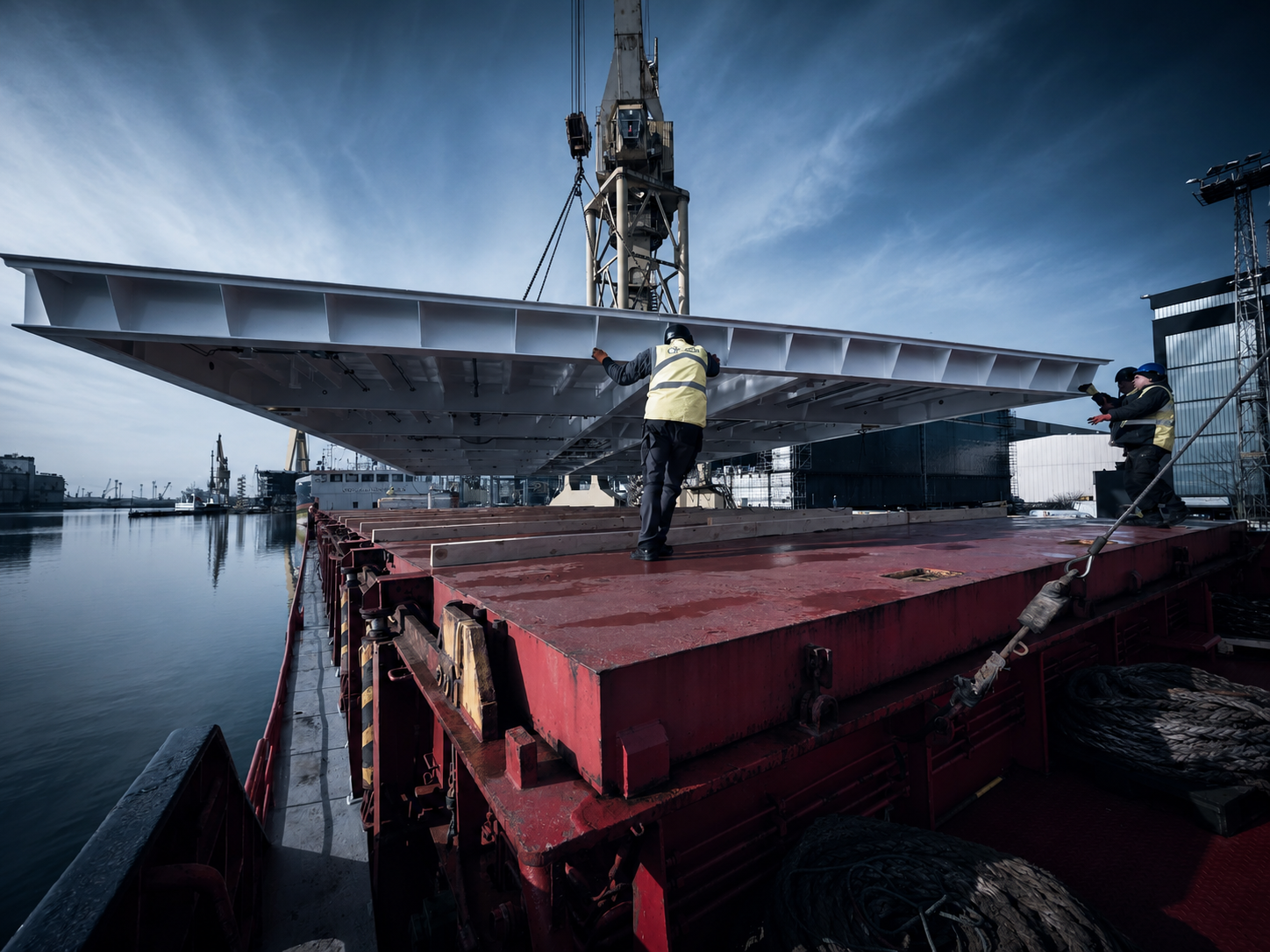
This case study covers project cargo transportation of oversized car-deck platforms from Poland to Sweden using chartered vessel.
Cargo particulars and task
The project involved the transportation of eight steel platforms from Szczecin, Poland, to Landskrona, Sweden. Each unit measured approximately 20.0 × 10.0 × 1.0 metres and weighed around 20 tonnes, resulting in a total cargo volume of approximately 160 tonnes.
Although the individual unit weight was relatively moderate, the exceptionally large footprint of each platform required a dedicated breakbulk shipping solution. The cargo dimensions exceeded standard road transport limitations and ruled out conventional containerised transport.
The scope of work included vessel selection, cargo handling coordination, loading supervision, sea fastening arrangements and overall project logistics management to ensure safe and timely delivery to Sweden.
Engineering and preparation
From an engineering perspective, the project required careful consideration of deck utilisation, load distribution and cargo accessibility for securing operations. Due to the large dimensions and relatively low profile of the platforms, the loading concept had to maximise available deck space while maintaining sufficient access for lashing and inspection.
A preliminary stowage arrangement was developed to determine the optimum positioning of all eight units and to verify that the cargo could be loaded, secured and discharged efficiently. Particular attention was paid to sea fastening arrangements and the sequence of loading operations to avoid unnecessary cargo handling and to facilitate discharge operations at the destination.
Close coordination was maintained between the vessel operator, terminal personnel and stevedores throughout the preparation stage.
Solution
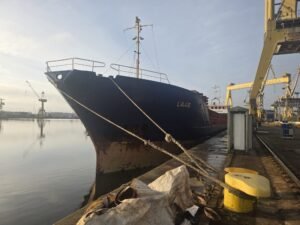
A dedicated breakbulk shipping solution was selected for the project. Oversized cargo was delivered to the load port in Szczecin and loaded directly onto the vessel for transportation to Landskrona.
The selected arrangement allowed all eight platforms to be shipped in one voyage, reducing handling risks and ensuring efficient utilisation of vessel deck capacity. Terminal handling, cargo supervision and sea fastening activities were coordinated as part of a single project logistics package.
Challenges
Although the cargo weight of approximately 20 tonnes per unit was relatively moderate, the unusually large footprint of each platform created specific engineering challenges related to stowage and sea fastening.
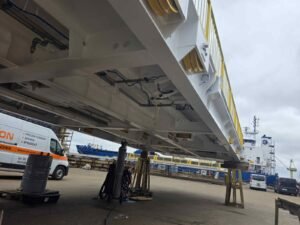
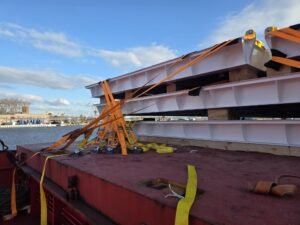
During loading preparations, it became apparent that the platforms had not been designed with dedicated lashing points suitable for marine transportation. As a result, the originally planned securing arrangement had to be reviewed and revised. The sea fastening concept was re-engineered to accommodate the available structural members while ensuring that lashing forces could be transferred safely without introducing excessive local stresses into the cargo structure.
Another challenge involved the optimisation of stowage and securing arrangements for eight oversized units on a limited deck area. Sufficient access had to be maintained for stevedores to install and inspect lashings, while simultaneously maximising vessel deck utilisation and ensuring that discharge operations in Landskrona could be performed efficiently.
The operation required close cooperation between vessel representatives, terminal personnel and cargo handling teams to adapt the securing arrangements and maintain the loading schedule without compromising safety.
What was done
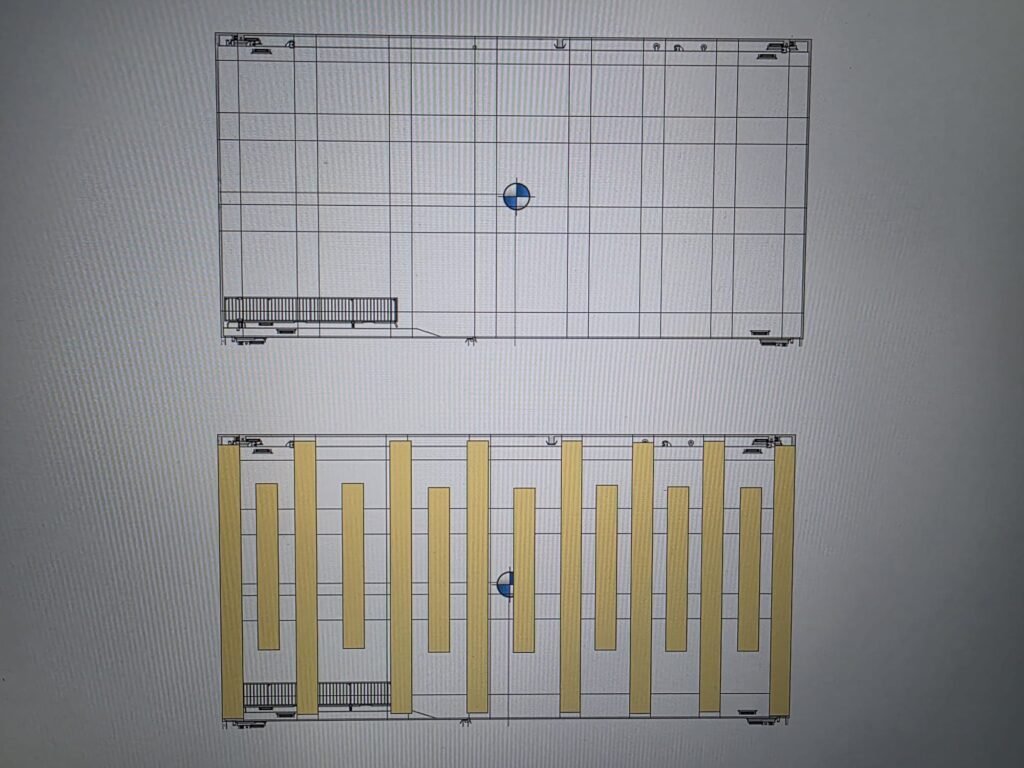
Enkel Project Logistics managed the operation from the planning stage through to final delivery in Sweden. Following a review of cargo particulars and deck utilisation requirements, a dedicated breakbulk solution was developed for the transportation of all eight platforms in a single voyage.
The scope of work included vessel selection and booking, preparation of the stowage concept, coordination with terminals and stevedores, and supervision of loading operations. Particular attention was given to cargo securing arrangements after it became apparent that the structures had not been equipped with dedicated marine lashing points. The original sea fastening concept was reviewed and adapted to utilise available structural members while maintaining safe load transfer and adequate access for installation and inspection of lashings.
Throughout the project, close coordination was maintained between vessel representatives, terminal personnel and cargo handling teams to ensure that loading activities proceeded safely and according to schedule. Loading operations, sea fastening arrangements and final discharge planning were continuously monitored to minimise handling risks and avoid delays at destination.
Result
All eight oversized platforms were successfully transported from Szczecin, Poland, to Landskrona, Sweden without damage and within the agreed project schedule.
Despite the challenges associated with the absence of dedicated lashing points and the requirement to optimise deck utilisation, the revised sea fastening arrangement was implemented successfully and all cargo units remained secure throughout the voyage. No additional handling or cargo repositioning was required during discharge operations.
The project demonstrated the importance of engineering-based project logistics, where safe execution depends not only on transportation itself, but also on proper stowage planning, sea fastening design, loading supervision and effective coordination between all stakeholders involved in the operation.
Services involved:
• Heavy Cargo Transport
• Chartering
• Project Logistics
• Sea Fastening Coordination
• Terminal Handling
• Loading Supervision
If you are dealing with similar cargo, feel free to get in touch.